
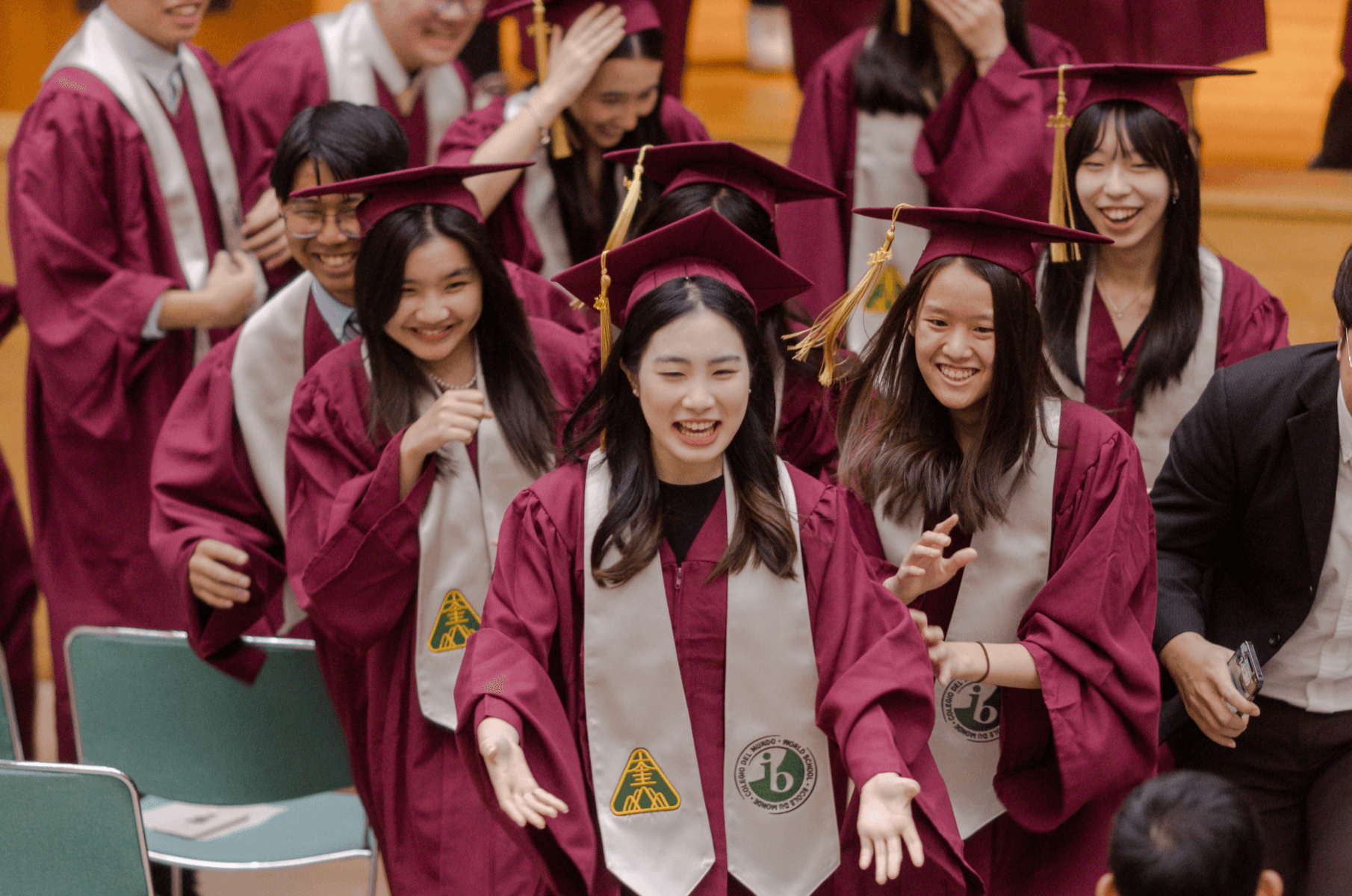
Diploma Program
(G11-12)
Diploma Program
(G11-12)
Diploma Program
(G11-12)
Equipping rigorous academic competencies through an individualized offering of six core subjects, enabling students for transformative action.
See our 2026-27 high school profile here.
Equipping rigorous academic competencies through an individualized offering of six core subjects, enabling students for transformative action.
See our 2026-27 high school profile here.
Equipping rigorous academic competencies through an individualized offering of six core subjects, enabling students for transformative action.
See our 2026-27 high school profile here.
Class of 2026 academic results
Class of 2026 academic results
41 full IB diploma students,
3 non-IB diploma students.
41 full IB diploma students,
3 non-IB diploma students.


Classes Offered
For the Class of 2026
For the Class of 2026
Group 1: Studies in language & literature (Language A)
English A: Language & literature, HL/SL
Chinese A: Language & literature, HL/SL
Group 1: Studies in language & literature (Language A)
English A: Language & literature, HL/SL
Chinese A: Language & literature, HL/SL
Group 1: Studies in language & literature (Language A)
English A: Language & literature, HL/SL
Chinese A: Language & literature, HL/SL
Group 2: Language acquisition
Chinese B, HL/SL
English B, HL/SL
Group 2: Language acquisition
Chinese B, HL/SL
English B, HL/SL
Group 2: Language acquisition
Chinese B, HL/SL
English B, HL/SL
Group 3: Individual & societies
Business management, HL/SL
Digital society, HL/SL
History, HL/SL
Psychology, HL/SL
Economics, HL*
Group 3: Individual & societies
Business management, HL/SL
Digital society, HL/SL
History, HL/SL
Psychology, HL/SL
Economics, HL*
Group 3: Individual & societies
Business management, HL/SL
Digital society, HL/SL
History, HL/SL
Psychology, HL/SL
Economics, HL*
Group 4: Experimental sciences
Biology, HL/SL
Chemistry, HL/SL
Computer Science, HL/SL
Environmental systems & societies, SL
Physics, HL/SL
Group 4: Experimental sciences
Biology, HL/SL
Chemistry, HL/SL
Computer Science, HL/SL
Environmental systems & societies, SL
Physics, HL/SL
Group 4: Experimental sciences
Biology, HL/SL
Chemistry, HL/SL
Computer Science, HL/SL
Environmental systems & societies, SL
Physics, HL/SL
Group 5: Mathematics
Mathematics: Analysis & approaches, HL/SL
Mathematics: Applications & interpretations, HL/SL
Group 5: Mathematics
Mathematics: Analysis & approaches, HL/SL
Mathematics: Applications & interpretations, HL/SL
Group 5: Mathematics
Mathematics: Analysis & approaches, HL/SL
Mathematics: Applications & interpretations, HL/SL
Group 6: Arts and electives
Visual arts, HL/SL
Another subject from groups 1-4, HL/SL
Another subject from the IB-approved online provider Pamoja, HL/SL*
Group 6: Arts and electives
Visual arts, HL/SL
Another subject from groups 1-4, HL/SL
Another subject from the IB-approved online provider Pamoja, HL/SL*
IB Core
Creativity, activity, service (CAS)
Extended essay (EE)
Theory of knowledge (TOK)
*School-supported, self-taught course
IB Core
Creativity, activity, service (CAS)
Extended essay (EE)
Theory of knowledge (TOK)
*School-supported, self-taught course
IB Core
Creativity, activity, service (CAS)
Extended essay (EE)
Theory of knowledge (TOK)
*School-supported, self-taught course
Group 1: Studies in language & literature (Language A)
English A: Language & literature, HL/SL
Chinese A: Language & literature, HL/SL
Group 5: Mathematics
Mathematics: Analysis & approaches, HL/SL
Mathematics: Applications & interpretations, HL/SL
Group 2: Language acquisition
Chinese B, HL/SL
English B, HL/SL
Group 6: Arts and electives
Visual arts, HL/SL
Another subject from groups 1-4, HL/SL
Another subject from the IB-approved online provider Pamoja, HL/SL*
Group 3: Individual & societies
Business management, HL/SL
Digital society, HL/SL
History, HL/SL
Psychology, HL/SL
Economics, HL*
IB Core
Creativity, activity, service (CAS)
Extended essay (EE)
Theory of knowledge (TOK)
*School-supported, self-taught course
Group 4: Experimental sciences
Biology, HL/SL
Chemistry, HL/SL
Computer Science, HL/SL
Environmental systems & societies, SL
Physics, HL/SL
IB Core

Liwia Komorowska (Class of 2022)
Creativity, Action, and Service (CAS)
CAS enables students to enhance their personal and interpersonal development by learning through experience. It provides opportunities for self-determination and collaboration with others, fostering a sense of accomplishment and enjoyment from their work. At different stages of their CAS journey, typically at the beginning, middle and end, students construct their own personal inquiry and reflective questions that allow them to build a CAS program based on the IB Learner Profile attributes. Read Liwia Komorowska's (Class of 2022) Joy Chang's (Class of 2025), and Alina Lee (Class of 2025) individual CAS reflections.
"Although it may seem exaggerated, saying I could not lose myself was difficult when I did not even know who I was. CAS was the opportunity I had to unearth all the interests I had pushed to the side my whole life. I realize now that CAS was a way to develop hobbies for myself and get to know myself and my interests better. This proved to be very therapeutic as each experience was a chance to... try something new for myself, knowing that I do not have to compete in CAS and that it is not about who is the best. I can say with confidence that the nature of CAS definitely shows the beauty in individuality and guides us into adulthood. It motivates us to maintain character, enthusiasm and passion while being in such a competitive and stressful environment that leads to adulthood."
Creativity, Action, and Service (CAS)
CAS enables students to enhance their personal and interpersonal development by learning through experience. It provides opportunities for self-determination and collaboration with others, fostering a sense of accomplishment and enjoyment from their work. At different stages of their CAS journey, typically at the beginning, middle and end, students construct their own personal inquiry and reflective questions that allow them to build a CAS program based on the IB Learner Profile attributes. Read Liwia Komorowska's (Class of 2022) Joy Chang's (Class of 2025), and Alina Lee (Class of 2025) individual CAS reflections.
"Although it may seem exaggerated, saying I could not lose myself was difficult when I did not even know who I was. CAS was the opportunity I had to unearth all the interests I had pushed to the side my whole life. I realize now that CAS was a way to develop hobbies for myself and get to know myself and my interests better. This proved to be very therapeutic as each experience was a chance to... try something new for myself, knowing that I do not have to compete in CAS and that it is not about who is the best. I can say with confidence that the nature of CAS definitely shows the beauty in individuality and guides us into adulthood. It motivates us to maintain character, enthusiasm and passion while being in such a competitive and stressful environment that leads to adulthood."
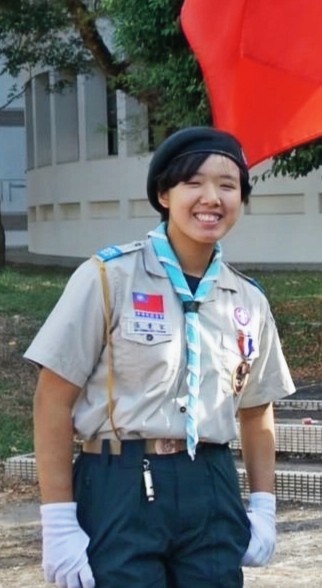
Joy Chang (Class of 2025)
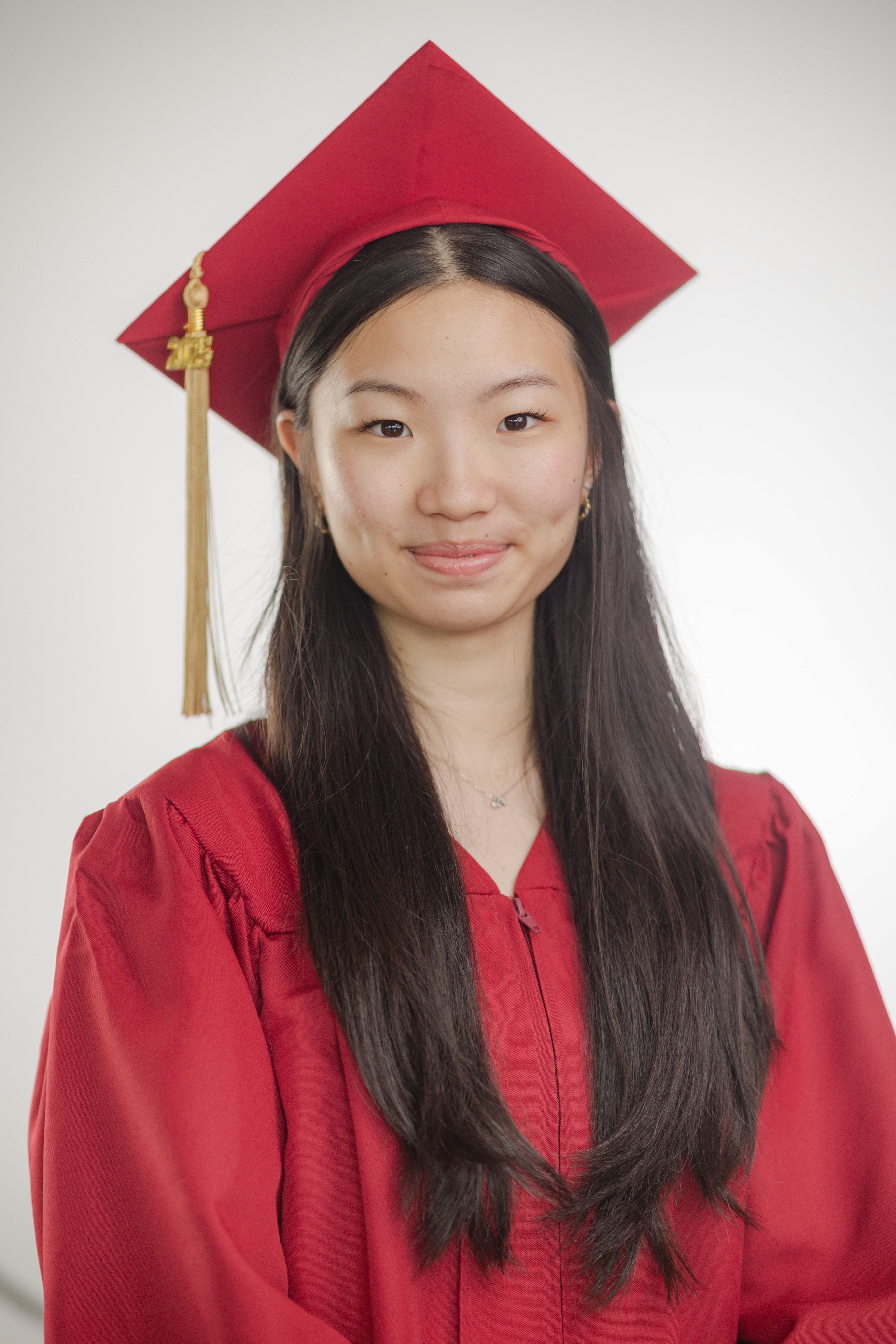
Alina Lee (Class of 2025)
Extended Essay (EE)
Extended Essay (EE)
The extended essay is an in-depth study of a focused topic chosen from one of the student’s six chosen subjects. It is intended to promote academic research and writing skills, providing students with an opportunity to engage in personal research in a topic of their own choice, under the guidance of a supervisor. EE leads to a major piece of formally presented, structured writing, in which ideas and findings are communicated in a reasoned and coherent manner. See Howard Ma’s (Class of 2019) exploration of the complexity of his topic in the opening paragraph of his EE.
“…However, these methods are typically complicated and expensive, making it difficult for large-scale production in mainstream industries. Secondly, another challenge is how to attach graphene on the glass substrate. Being as advantages of graphene, hardness and its unique molecular structure are also obstacles that have to be overcame. Graphene is a sp2 hybridized crystalline allotrope of carbon and its carbon atoms are bonded densely in a hexagonal molecular structure. Hence, it makes graphene’s extraordinary hardness and difficult to cut precisely and flawlessly into a required size or shape to attach on the glass substrate.”
The extended essay is an in-depth study of a focused topic chosen from one of the student’s six chosen subjects. It is intended to promote academic research and writing skills, providing students with an opportunity to engage in personal research in a topic of their own choice, under the guidance of a supervisor. EE leads to a major piece of formally presented, structured writing, in which ideas and findings are communicated in a reasoned and coherent manner. See Howard Ma’s (Class of 2019) exploration of the complexity of his topic in the opening paragraph of his EE.
The extended essay is an in-depth study of a focused topic chosen from one of the student’s six chosen subjects. It is intended to promote academic research and writing skills, providing students with an opportunity to engage in personal research in a topic of their own choice, under the guidance of a supervisor. EE leads to a major piece of formally presented, structured writing, in which ideas and findings are communicated in a reasoned and coherent manner. See Howard Ma’s (Class of 2019) exploration of the complexity of his topic in the opening paragraph of his EE.
“…However, these methods are typically complicated and expensive, making it difficult for large-scale production in mainstream industries. Secondly, another challenge is how to attach graphene on the glass substrate. Being as advantages of graphene, hardness and its unique molecular structure are also obstacles that have to be overcame. Graphene is a sp2 hybridized crystalline allotrope of carbon and its carbon atoms are bonded densely in a hexagonal molecular structure. Hence, it makes graphene’s extraordinary hardness and difficult to cut precisely and flawlessly into a required size or shape to attach on the glass substrate.”
Read Cherry Wei’s (Class of 2024) reflections during the process of writing her EE.
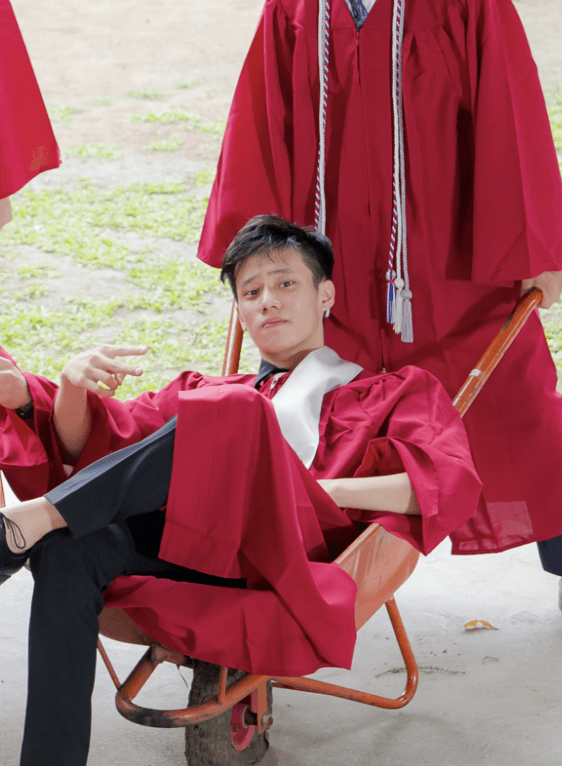
Howard Ma (Class of 2019)
Read Cherry Wei’s (Class of 2024) reflections during the process of writing her EE.
First reflection: “Antisocial personality disorder [ASPD]… is a leading cause of criminal behaviours, and I aim to develop a more empathetic view toward criminals through understanding the aetiology of ASPD and prevent further harms…”
Interim reflection: “I tried looking into more profound explanations that elucidate the correlation between [adverse childhood experiences (ACE)] and ASPD, and found that there are cognitive theories and developmental explanations that justify why certain types of ACEs contribute to ASPD more significantly. This inspired me to restructure my EE… delving into the underlying reasons behind these variations to develop a more comprehensive and original argument.”
First reflection: “Antisocial personality disorder [ASPD]… is a leading cause of criminal behaviours, and I aim to develop a more empathetic view toward criminals through understanding the aetiology of ASPD and prevent further harms…”
Interim reflection: “I tried looking into more profound explanations that elucidate the correlation between [adverse childhood experiences (ACE)] and ASPD, and found that there are cognitive theories and developmental explanations that justify why certain types of ACEs contribute to ASPD more significantly. This inspired me to restructure my EE… delving into the underlying reasons behind these variations to develop a more comprehensive and original argument.”
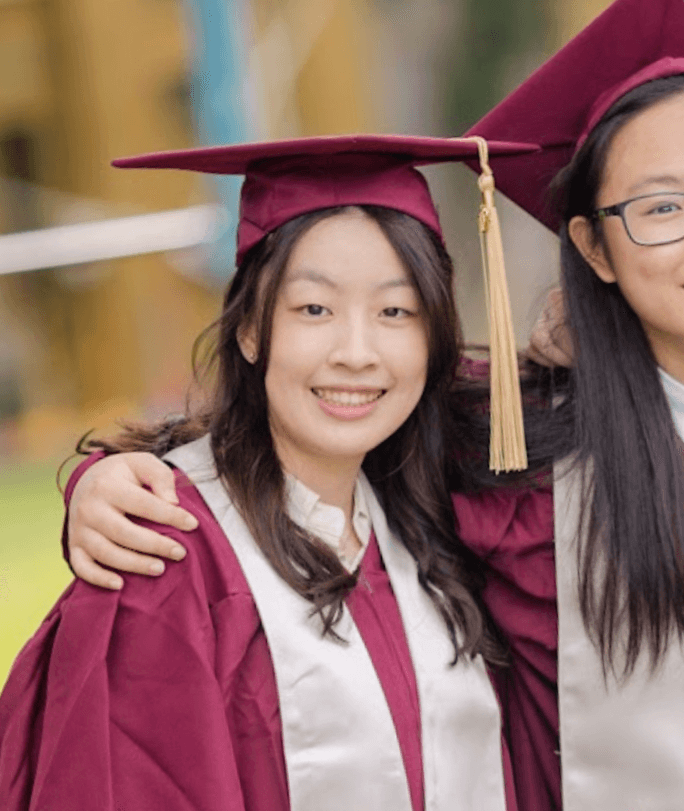
Cherry Wei (Class of 2024)
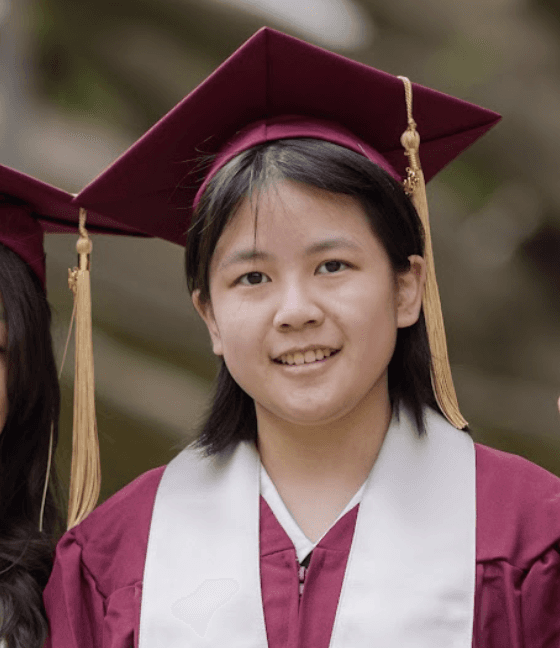
Victoria Kao (Class of 2024)
Theory of Knowledge (TOK)
TOK plays a special role in the DP by providing an opportunity for students to reflect on the nature of knowledge, and on how we know what we claim to know. It offers students and their teachers the opportunity to reflect critically on diverse ways of knowing and on areas of knowledge and consider the role and nature of knowledge in their own culture, in the cultures of others and in the wider world. In addition, TOK prompts students to: be aware of themselves as thinkers, encouraging them to become more acquainted with the complexity of knowledge, and recognize the need to act responsibly in an increasingly interconnected but uncertain world. See how Victoria Kao (Class of 2024) expertly frames her exploration in the opening paragraph of her TOK essay:
"Subjectivity represents judgements determined from personal preferences or feelings and, when inputted into different contexts and mediums, induces different responses... Contrary to conventional thought, however, subjectivity in the arts is not overly celebrated, since entrenched artistic traditions and political contexts are often limitations in the acceptance of an artist’s subjectivity. Conversely, when approaching subjectivity in history, subjectivity receives greater scrutiny, considered less acceptable since the subject deals with interpreting past events. In this sense, subjectivity in history is unfairly condemned, with condemnation of subjectivity arguably antithetical to the inherency of subjectivity in historical study and debate... This essay will evaluate these themes, explore how subjectivity is received within these subject areas, and argue for a nuanced view on the role of subjectivity, one that can account for both the necessary requirement and inexorable debate that arises within both fields."
Theory of Knowledge (TOK)
TOK plays a special role in the DP by providing an opportunity for students to reflect on the nature of knowledge, and on how we know what we claim to know. It offers students and their teachers the opportunity to reflect critically on diverse ways of knowing and on areas of knowledge and consider the role and nature of knowledge in their own culture, in the cultures of others and in the wider world. In addition, TOK prompts students to: be aware of themselves as thinkers, encouraging them to become more acquainted with the complexity of knowledge, and recognize the need to act responsibly in an increasingly interconnected but uncertain world. See how Victoria Kao (Class of 2024) expertly frames her exploration in the opening paragraph of her TOK essay:
"Subjectivity represents judgements determined from personal preferences or feelings and, when inputted into different contexts and mediums, induces different responses... Contrary to conventional thought, however, subjectivity in the arts is not overly celebrated, since entrenched artistic traditions and political contexts are often limitations in the acceptance of an artist’s subjectivity. Conversely, when approaching subjectivity in history, subjectivity receives greater scrutiny, considered less acceptable since the subject deals with interpreting past events. In this sense, subjectivity in history is unfairly condemned, with condemnation of subjectivity arguably antithetical to the inherency of subjectivity in historical study and debate... This essay will evaluate these themes, explore how subjectivity is received within these subject areas, and argue for a nuanced view on the role of subjectivity, one that can account for both the necessary requirement and inexorable debate that arises within both fields."
Theory of Knowledge (TOK)
TOK plays a special role in the DP by providing an opportunity for students to reflect on the nature of knowledge, and on how we know what we claim to know. It offers students and their teachers the opportunity to reflect critically on diverse ways of knowing and on areas of knowledge and consider the role and nature of knowledge in their own culture, in the cultures of others and in the wider world. In addition, TOK prompts students to: be aware of themselves as thinkers, encouraging them to become more acquainted with the complexity of knowledge, and recognize the need to act responsibly in an increasingly interconnected but uncertain world. See how Victoria Kao (Class of 2024) expertly frames her exploration in the opening paragraph of her TOK essay:
"Subjectivity represents judgements determined from personal preferences or feelings and, when inputted into different contexts and mediums, induces different responses... Contrary to conventional thought, however, subjectivity in the arts is not overly celebrated, since entrenched artistic traditions and political contexts are often limitations in the acceptance of an artist’s subjectivity. Conversely, when approaching subjectivity in history, subjectivity receives greater scrutiny, considered less acceptable since the subject deals with interpreting past events. In this sense, subjectivity in history is unfairly condemned, with condemnation of subjectivity arguably antithetical to the inherency of subjectivity in historical study and debate... This essay will evaluate these themes, explore how subjectivity is received within these subject areas, and argue for a nuanced view on the role of subjectivity, one that can account for both the necessary requirement and inexorable debate that arises within both fields."
Read Devin Chang's (Class of 2020) riveting conclusion in his TOK essay:
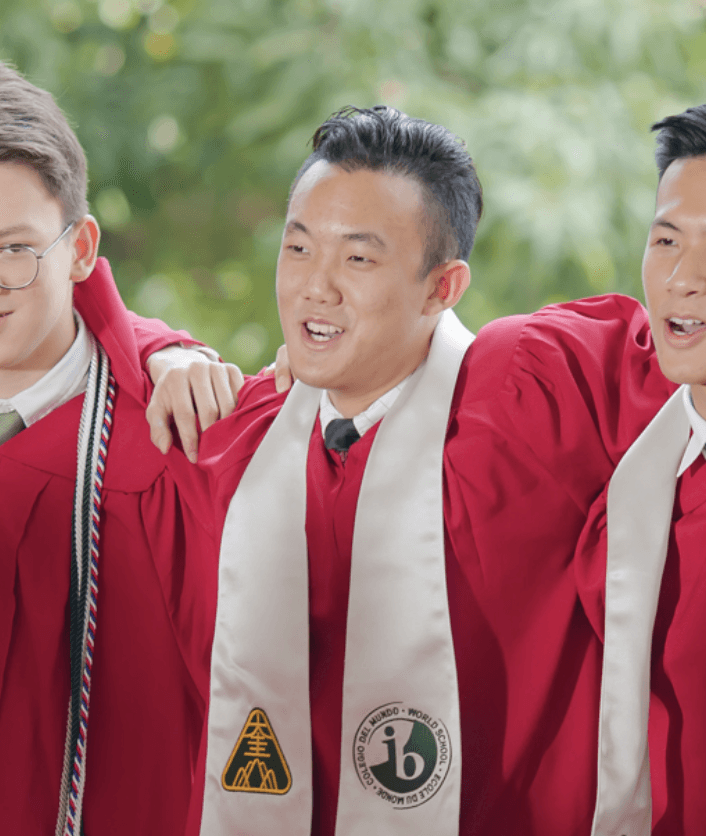
Devin Chang (Class of 2020)
Read Devin Chang's (Class of 2020) riveting conclusion in his TOK essay:
「綜上所述,描述與解釋之間的界線受到不同知識領域的真實性而有所不同。歷史領域受到誤植記憶以及情感導致描述中語言使用變得主觀,並和解釋相互矛盾;藝術領域中的非感官式藝術作品,追求其藝術作品所帶出的抽象概念而非視覺上的美感,使描述與解釋之間的界線變得清晰。然而回歸到描述解釋以及主客觀之間的關係,語言仍然扮演重要的角色,當人們對於事物或事件的了解越深,懂的如何包裝語言,情感也相對被語言所包裝,那麼界線是否又再次變的真實?」
Read Devin Chang's (Class of 2020) riveting conclusion in his TOK essay:
「綜上所述,描述與解釋之間的界線受到不同知識領域的真實性而有所不同。歷史領域受到誤植記憶以及情感導致描述中語言使用變得主觀,並和解釋相互矛盾;藝術領域中的非感官式藝術作品,追求其藝術作品所帶出的抽象概念而非視覺上的美感,使描述與解釋之間的界線變得清晰。然而回歸到描述解釋以及主客觀之間的關係,語言仍然扮演重要的角色,當人們對於事物或事件的了解越深,懂的如何包裝語言,情感也相對被語言所包裝,那麼界線是否又再次變的真實?」
「綜上所述,描述與解釋之間的界線受到不同知識領域的真實性而有所不同。歷史領域受到誤植記憶以及情感導致描述中語言使用變得主觀,並和解釋相互矛盾;藝術領域中的非感官式藝術作品,追求其藝術作品所帶出的抽象概念而非視覺上的美感,使描述與解釋之間的界線變得清晰。然而回歸到描述解釋以及主客觀之間的關係,語言仍然扮演重要的角色,當人們對於事物或事件的了解越深,懂的如何包裝語言,情感也相對被語言所包裝,那麼界線是否又再次變的真實?」
200 Mingde Road
Beitou District, Taipei City
Taiwan 11280 R.O.C.
Tel: (+886)-2821-2009
Fax: (+886)-2820-5790



200 Mingde Road
Beitou District, Taipei City
Taiwan 11280 R.O.C.
Tel: (+886)-2821-2009
Fax: (+886)-2820-5790
200 Mingde Road
Beitou District, Taipei City
Taiwan 11280 R.O.C.
Tel: (+886)-2821-2009
Fax: (+886)-2820-5790
200 Mingde Road
Beitou District, Taipei City
Taiwan 11280 R.O.C.
Tel: (+886)-2821-2009
Fax: (+886)-2820-5790